WARDOGS vs Squad: Communication and Objective Guide
Compare WARDOGS vs Squad by objectives, communication, loadouts, base building, combined arms, player decisions, and source-scoped facts clearly.
What is the main difference between WARDOGS and Squad?
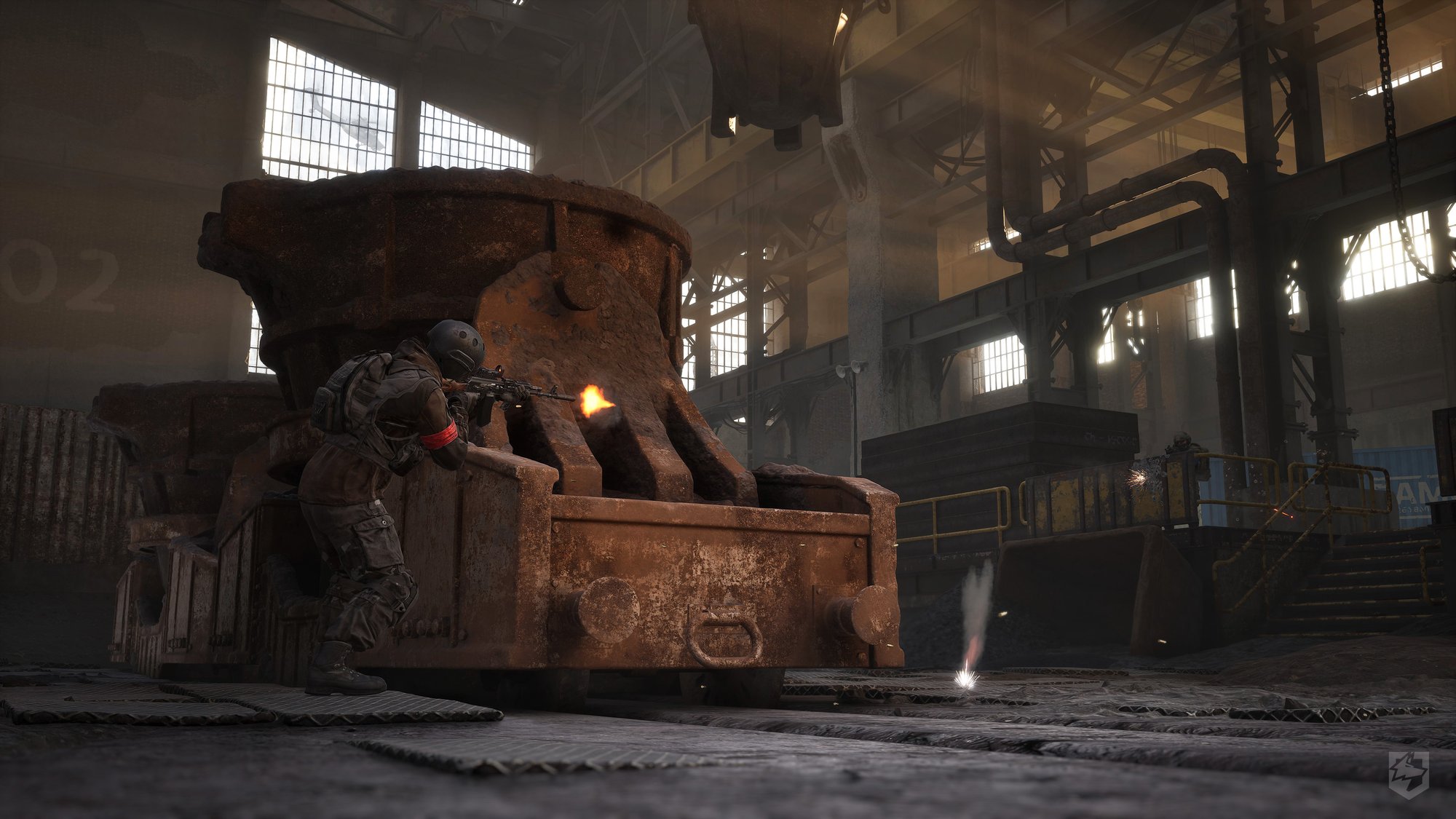
Both games describe teamwork, communication, combined arms, and large-scale tactical combat, but their documented match structures are different. WARDOGS places up to 100 players in three teams competing for one randomized Control Zone, while Squad’s Steam page describes 50-versus-50 battles, realistic combat, faction-specific weapons and vehicles, and base building. The comparison below keeps each statement attached to its own official source.
WARDOGS also makes persistent cash and player-defined loadouts part of the loop. Squad’s cited store page emphasizes squads, factions, realistic combat, logistics, communication layers, and a broad content catalogue instead. Neither source provides a fair same-build test for performance, latency, or fun, so this is a fact comparison rather than a winner claim.
How do their objectives work?
WARDOGS is built around a King-of-the-Hill-inspired Control Zone. The zone is randomized within a larger map, the team with the most players inside earns points at the documented scoring interval, and the first team to reach 100 points wins. The Hot Zone adds a moving sub-objective that can pay double cash and influence presence, but it remains connected to the same three-team contest.
Squad’s Steam page describes its 50-versus-50 battles and a range of maps and factions, but the material collected here does not define one single objective or scoring rule for every Squad layer. Its official page is therefore used to establish the game’s broad combat and teamwork framework, not to invent a direct Control Zone equivalent. A WARDOGS player should not assume that Squad’s objective flow or team count transfers to WARDOGS.
How does communication differ?
WARDOGS official descriptions confirm local or proximity voice communication for talking with nearby teammates or enemy players. The sources also describe additional squad communication tools and vehicle locking for coordination, while the complete keybind and range table remains not listed in the collected sources. Communication is tied to moving into the Control Zone, transporting friendlies, supporting a push, or disrupting an enemy position.
Squad’s official Steam page and Early Access manual document several in-game VoIP layers. Local voice is heard by nearby team members, squad radio reaches the squad regardless of distance, and command radio connects squad leaders; the Steam page also describes communication between squad leaders and the overall team commander. These are Squad-specific systems and should not be used to fill missing WARDOGS channel rules.
Do both games use fixed classes or squads?
WARDOGS presents roles as player-defined through each-life loadouts. The official descriptions give examples such as medic, sniper, artillery, ground support, tank commander, builder, transport pilot, and concealment, but they do not publish a fixed class list or mandatory role menu. A player can adjust weapons, gear, utility, and vehicles around the current Control Zone problem.
Squad’s store page describes nine-person squads inside larger teams, faction-specific weapons and vehicles, and communication tools that support squad leaders. That structure is a documented part of Squad’s teamwork model. It does not prove that WARDOGS has squad-size limits, squad-leader permissions, or the same role restrictions; the WARDOGS materials explicitly describe flexible player-defined roles instead.
How do loadouts and economy compare?
In WARDOGS, every player begins with the published $10,000 and buys a custom loadout for each life. Teamplay actions such as revives, transport, and objective control reward cash, and the balance persists from match to match. The choice between a weapon, support item, or vehicle is therefore connected to both the immediate fight and future spending.
The Squad sources collected for this page describe loadouts, weapons, gear, and vehicles, but they do not describe a matching persistent cash account or WARDOGS-style Hot Zone payout. That absence is limited to the cited sources and does not rule out other Squad systems. Do not compare purchase prices, cash efficiency, or progression without a current, versioned source for both games.
How do base building and logistics compare?
WARDOGS combines construction and destruction with the objective. Team17 describes forward operating bases and fortified chokepoints, while the Steam page gives transport, supply, rocket-launcher, and heavy-vehicle examples. The exact build menu, materials, repair behavior, and destruction thresholds are not fully published and remain not listed in the collected sources.
Squad’s official page explicitly describes a building and logistics system: players can construct fortifications and emplacements, supply ammunition and materials, and use items such as HMGs, AT guns, sandbags, razor wire, and ammunition. Those examples establish Squad’s documented logistics vocabulary, not a one-to-one WARDOGS blueprint. The useful question is whether the player wants a known logistics framework or WARDOGS’ objective-and-cash loop as described by its sources.
What do combined arms mean in each game?
Both games connect infantry to vehicles. WARDOGS describes helicopters for transport, armored vehicles for pressure, and artillery-style support that can alter a fortified battlefield. Because each life is purchased from cash, the vehicle decision also carries economic risk.
Squad’s official description highlights realistic faction-specific weapons and vehicles within 50-versus-50 combined-arms battles. The sources do not support a cross-game chart for armor, speed, fuel, seats, damage, or repair time. Treat any comparison of a specific tank, helicopter, or weapon as not published unless both current game builds supply the same field.
Which game fits a player’s preferred pace?
The sources position WARDOGS as tactical but accessible, with no single required way to earn or approach the Control Zone. Players can fight, revive, transport, build, destroy, or use the Hot Zone while managing persistent cash. Squad’s official copy positions it around authentic combat, teamwork, realistic tactics, squad communication, and faction-based combined arms.
Those descriptions help a player choose a system, not a universal winner. Select WARDOGS when its three-team objective, flexible loadouts, and economy are the appeal; select Squad when its documented squad hierarchy, VoIP layers, faction identity, and logistics structure are the appeal. Current community size, matchmaking, and performance still require live checks.
What remains unconfirmed?
The collected sources do not establish identical map sizes, ticket rules, revive systems, respawn timing, weapon damage, vehicle performance, or network behavior. They also do not confirm a final WARDOGS squad limit, full voice range, or complete construction catalogue. Preserve a clear scope note instead of importing Squad mechanics into a WARDOGS guide.
The direct answer is that WARDOGS and Squad share a tactical teamplay space, but their confirmed structures are distinct: WARDOGS centers three teams, one randomized Control Zone, and persistent cash, while Squad documents 50-versus-50 battles with faction, squad, VoIP, and logistics systems.
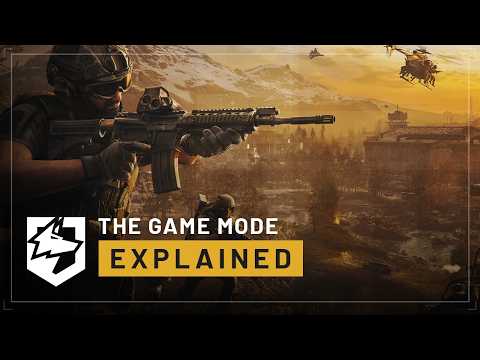
WARDOGS | Game Mode Explained
Sources
- WARDOGS on Steam
- WARDOGS at Team17
- Squad on Steam
- Squad Early Access Manual
- WARDOGS | Game Mode Explained
(Guide information is for reference only.)
Related Articles
guides
WARDOGS Guide: How to Start Your First Match
This WARDOGS beginner guide explains the first-match loop, Control Zone objective, persistent cash, loadouts, teamwork, and safe early decisions.
guides
WARDOGS Compare Tool: Evidence-Based Loadout Choices
Use the WARDOGS Compare Tool to review weapons, equipment, and vehicles by role, source, and purchase context while unpublished stats stay clearly marked.
guides
WARDOGS Gameplay Guide: Control Zone, Cash & Teamplay
Learn how WARDOGS gameplay connects three-team Control Zone scoring, persistent cash, loadouts, vehicles, construction, destruction, and teamplay rewards.
Was this helpful?
Thanks for the feedback!