WARDOGS Maps Guide: Size, Zones, and Variations
Explore WARDOGS maps with the 256 km² battlefield, randomized 2×2 km Control Zone, planned variations, and test-build map details marked unconfirmed.

How large are the WARDOGS maps?
The published WARDOGS battlefield is 256 km², with a randomized 2×2 km Control Zone inside the larger space. The large figure describes the wider battlefield and the smaller figure describes the active objective. They are not interchangeable map boundaries.
The wider area gives vehicles, logistics, construction, destruction, and flanking a practical role before teams converge on the objective. Official sources do not say that every square kilometre is equally accessible in every match. Outer boundaries, travel limits, and deployment routes remain unpublished.
WARDOGS | Game Mode Explained — BULKHEAD
How many maps are planned for Early Access?
The collected planning material describes three maps, each with three variations. This is a scope statement, not proof of nine separately named maps. Official sources do not publish the complete names, rotation order, or the exact systems changed by each variation.
Variation works with randomized objective placement. A different Control Zone can change approach routes, terrain, building access, and transport needs even when the broader map remains the same. The randomization method and repeat frequency are not listed in the collected sources.
Which maps appeared in testing?
Community records from the Closed Beta reported Bakurani and Ozeti as test-build map names. Those reports describe different river, woodland, settlement, and agricultural environments, but they are test-period observations rather than a final Early Access roster. The third planned map and the official launch names remain unpublished.
A wiki can retain these names as versioned notes when the source and build are shown. It should not promise that every player will see the same map pool at launch. New announcements or a published roster should replace conditional notes when available.
What environments are officially shown?
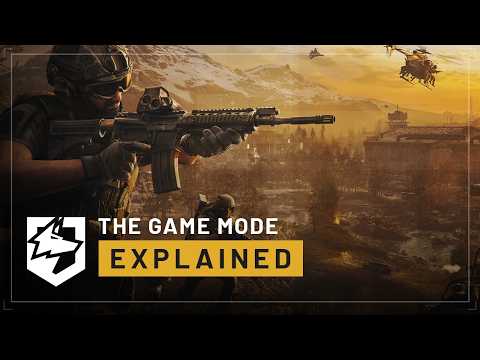
Official images show river terrain, wooded hills, residential streets, industrial buildings, damaged interiors, rural-industrial ground, and aerial views over a wider landscape. These images support WARDOGS’ combined-arms and destructible-battlefield presentation. Labels such as “Foundry” or “River” in an asset filename are not automatically in-game map names.
The aerial footage shows roads, bridges, forests, settlements, and distant mountains, but it does not draw a playable boundary or establish maximum flight altitude. A visible building is not automatically a named point of interest or fixed objective location. Use visuals as environment evidence only.
Why does randomized Control Zone placement matter?
The changing objective gives the wide battlefield tactical purpose. Teams must read the current route instead of memorizing one permanent central fight, and vehicle or construction choices can matter differently by terrain. A helicopter, fortified approach, or destroyed sightline may be valuable in one location and wasteful in another.
“Randomized” does not reveal the implementation. It could describe a curated pool, rotating sectors, procedural placement, or another system. No public source states how many locations exist, how often one repeats, or whether every part of the wider battlefield can become active.
How should players prepare for a new map?
Start with the active objective and the squad’s route, not a memorized drop. Keep a loadout that solves the immediate movement or support problem, preserve persistent cash for another life, and watch how terrain changes sightlines and vehicle access. Revives, transport, spotting, supplies, construction, and objective control remain useful across the map pool.
Do not carry test-build assumptions into a later version without checking the relevant announcement. Layouts, variations, vehicle routes, and objective placement can change during Early Access. The reliable facts are the 256 km² battlefield, randomized 2×2 km objective, and planned three-map/three-variation scope.
What remains unconfirmed?
Final map names, points of interest, weather and lighting variants, outer boundaries, travel times, spawn layouts, destruction persistence, the objective-location pool, and whether Bakurani or Ozeti ship in the launch build are not listed in the collected sources. No complete official map atlas or rotation schedule is public in the collected evidence.
The direct answer is that WARDOGS maps combine a large battlefield with a smaller randomized objective and a planned three-map Early Access scope. Treat test-build names as conditional notes until the official roster is published.
Sources
(Guide information is for reference only.)
Related Articles
guides
WARDOGS Guide: How to Start Your First Match
This WARDOGS beginner guide explains the first-match loop, Control Zone objective, persistent cash, loadouts, teamwork, and safe early decisions.
guides
WARDOGS Gameplay Guide: Control Zone, Cash & Teamplay
Learn how WARDOGS gameplay connects three-team Control Zone scoring, persistent cash, loadouts, vehicles, construction, destruction, and teamplay rewards.
guides
WARDOGS Game Modes: Control Zone and KOTH
See which WARDOGS Game Modes are confirmed, how Control Zone draws from King of the Hill, and why the game is not battle royale or extraction.
Was this helpful?
Thanks for the feedback!